Detecting PTSD in 35 Seconds: Voice Biomarkers and 6,200-Point Brain Mapping
Dr. Joseph Schneider pioneered functional neurology rehabilitation at Hope Brain Body Recovery Center after his 2017 hemorrhagic stroke. In this episode of My POTS Podcast, his conversation with Michael McIntyre, Founder and CEO of ARRC LED and creator of Elysium, shows how voice biomarker technology and quantum frequency work are reshaping what is possible beyond manual neurofeedback and adjustment-only care.
About This Blog
Dr. Joseph Schneider pioneered functional neurology rehabilitation at Hope Brain Body Recovery Center after his 2017 hemorrhagic stroke. In this episode of My POTS Podcast, his conversation with Michael McIntyre, Founder and CEO of ARRC LED and creator of Elysium, shows how voice biomarker technology and quantum frequency work are reshaping what is possible beyond manual neurofeedback and adjustment-only care.
They explore voice scans that analyze about one million data points in 35 seconds to flag PTSD, Parkinson’s, Alzheimer’s and depression, along with the idea of remote quantum treatment that delivers customized frequencies to patients anywhere through bio-field signatures. As specificity in brain mapping and frequency delivery improves, the old “hammer” methods like transcranial magnetic and electrical stimulation look increasingly blunt for complex neurodegenerative disease, PTSD and chronic conditions medicine often labels as hopeless.
Voice as Health Fingerprint
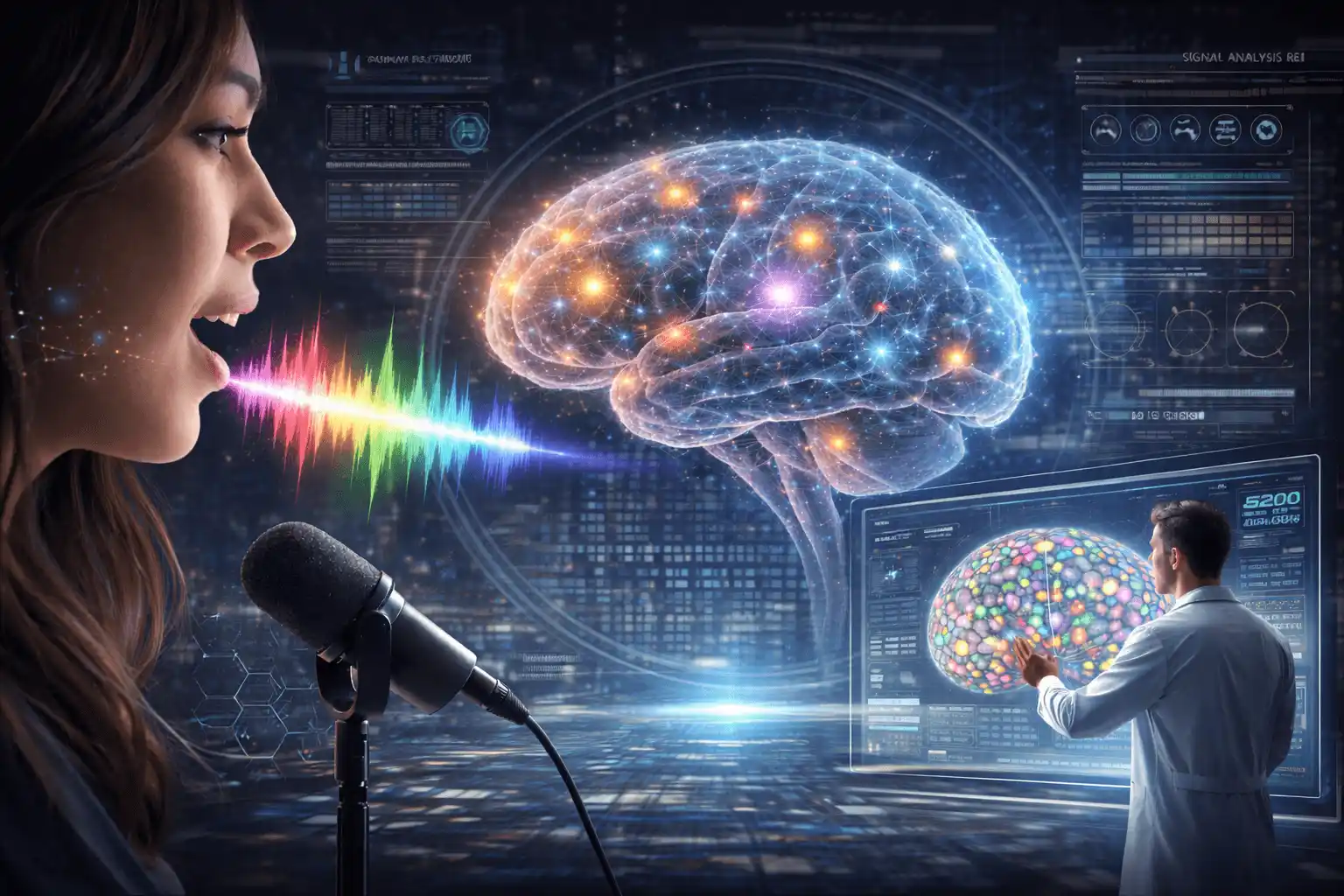
Michael explains how Elysium’s voice analysis performs a 35 second scan and captures roughly one million data points to create a vocal health fingerprint unique to each person. The data appear as sine waves with peaks and valleys, and each extreme corresponds to particular tissues, organs, or systems under stress.
Elysium then uses a seven-frequency augmentation protocol. During a 21-minute session, the system runs three-minute intervals that target the seven biggest high peaks and seven biggest low valleys. This means every patient receives a highly individualized protocol based on current bio-field patterns rather than generic settings that treat all PTSD or all Parkinson’s patients the same.
Industry-wide, the voice biomarker market is projected to grow from about $1.24 billion in 2025 to $5.39 billion by 2035, with models emerging for PTSD, Multiple Sclerosis, Huntington’s disease, mild cognitive impairment, Alzheimer’s disease, anxiety and depression. One audio recording can become a screening tool for multiple conditions at once without adding visit time or extra procedures.
Remote Quantum Treatment and Bio-field Signatures
Michael describes how bio-field signatures captured through voice scans can be used to guide remote work in Elysium light bed systems. A patient’s signature is loaded into the device, customized frequencies are applied to that pattern, and through quantum entanglement principles, the person benefits without being physically present. The technology is designed to scale to considerable numbers of people, each running individualized protocols based on their own voice scan.
This model stretches conventional cause-and-effect physics but fits emerging views of bio-field medicine and information transfer. Michael and Dr. Schneider compares it to power plant control systems, where a master controller communicates with every subsystem through precise information. In this analogy, the brain is the master controller, and the bio-field provides the blueprint that physical systems follow. When quantum frequencies restore coherence in that field, physiology tends to reorganize around the new pattern.
Brain Master Precision Versus “Hammer” Brain Stimulation
Dr. Schneider contrasts Brain Master neurofeedback, which maps 6,200 brain connectivity points (voxels), with more general approaches such as transcranial magnetic stimulation and transcranial electrical stimulation. He describes those methods as hammers that push large amounts of energy into one area without understanding network effects, often disturbing other regions in the process.
Brain Master’s next generation will expand to about 11,000 voxels, allowing more specific work in sub-cortical areas, brainstem nuclei and cerebellar circuits. With Est-Loretta 19 point training, clinicians can identify the weakest brain areas, display them to the patient and use neurofeedback to help the patient shift regions from red (dysregulated) to green (balanced). This highlights how much can change when patients are given precise feedback about their own brain activity.
PTSD as Trauma Stored in the Field
Both men describe PTSD as trauma held in the energy field surrounding the body rather than only a psychological diagnosis. These imprints keep driving physiological stress responses long after events end. Standard care manages symptoms with talk therapy and medication but rarely addresses the underlying energetic patterns.
In practice, Elysium’s frequency combinations seem to dissolve some of these blockages. Experienced meditators report seeing and feeling old trauma “pop” or release during and after light bed sessions. The process often continues for hours beyond the actual session, suggesting that the carrier energies work on subtle layers where trauma has been stored.
The story of a Native American patient who identified himself as a “wounded dog” shows how deeply identity can anchor illness. Even after physical changes in the clinic, he wanted to return to a wounded identity that brought attention and a sense of meaning. Until that attachment shifts, even the best protocols risk being temporary.
Media, Environment and Brain Dysregulation
Dr. Schneider shares real-time neurofeedback findings that horror media creates immediate brain dysregulation. When patients watch violent or disturbing content while their brainwaves are monitored, patterns shift into chaos and interfere with training goals. Nature films support smoother training, although scenes of predation can still disturb sensitive patients.
These observations extend to daily life. Patients with toxic jobs or relationships often improve during intensive care and then decline when they return to the same environment. The sounds, images, and emotional tone in those settings shape their physiology and nervous system patterns. Without addressing environment and identity, physical work in the clinic can only go so far.
Phase Angle as a Resilience Marker
Michael highlights how Elysium’s longer infrared wavelengths, absorbed in water within cell membranes, appear to improve phase angle, a key marker in bio-electrical impedance analysis. Higher phase angle indicates stronger cell membrane integrity and better overall cellular function. In their experience, patients show increased phase angle after each session, reflecting more resilient biology rather than narrow symptom relief.
This supports the idea that frequency-based work on cellular water and membranes can raise general resistance to disease and stress instead of chasing one label at a time.
To learn more about voice biomarker analysis, Brain Master neurofeedback, Elysium frequency technology and precision brain rehabilitation that goes beyond conventional models, listen to the full episode on My POTS Podcast and visit HopeBrainCenter.com or call 610-544-9800. Understanding that a 35 second voice scan and a 6,200 point brain map can guide highly specific care changes how we think about treating neurological dysfunction, trauma, and chronic disease.
Connect with Dr. Joseph Schneider:
Website: Hope Brain and Body Recovery Center; Hope Regeneration Center
Podcast: MyPOTSPodcast.com
LinkedIn: Joseph Schneider
YouTube: HopeBrainBodyRecoveryCenter
Instagram: @HopeBrainCenter_
Facebook: Hope Brain and Body Recovery Center
Connect with Michael McIntyre:
LinkedIn: @Michael-McIntyre
Website: www.ARRCLED.com
YouTube: @ARRC-LED
Instagram: @ARRCLED
Related Blog
Duis mi velit, auctor vitae leo a, luctus congue dolor. Nullam at velit quis tortor malesuada ultrices vitae vitae lacus. Curabitur tortor purus, tempor in dignissim eget, convallis in lorem.



Comments